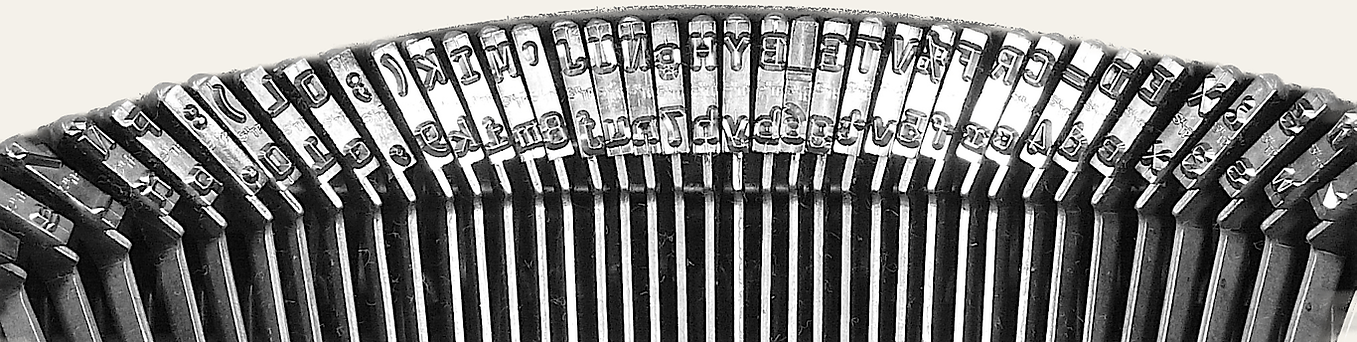


Royal Military-Issue Typewriter (1941) U.S.A.-M.D. Army Medical Department, WWII
ROYAL PORTABLE (B-SERIES), U.S.A.-M.D. TYPEWRITER — 1941
Known as “The Walcheren Royal”
Military-Issued to the United States Army Medical Department
Recovered from the Allied encampment on Walcheren Island, Netherlands All Original and Unrestored
A Royal typewriter, recovered from an important European battle site, manufactured in late 1941, in the final weeks of American peacetime production, and permanently embossed “U.S.A.-M.D.” for the United States Army Medical Department. It was recovered on Walcheren Island in Zeeland, The Netherlands, at the close of the Second World War and remained with the same local family for more than 80 years. Only seven U.S.A.-M.D. Royals are presently documented in public collections, collector archives and the specialist market; this is the earliest of them, and the most complete, and the one in the finest, complete, original condition. It survives in exceptional original condition, unrestored, with its original carrying case, its original metal ribbon spools and the heavily used ribbon found on the machine.
Walcheren, at the mouth of the Scheldt, was the last German stronghold barring Allied shipping from the port of Antwerp, on which the final advance into Germany depended. It was taken in November 1944 by British and Canadian forces under First Canadian Army, after the island's sea dykes had been deliberately breached, in some of the hardest fighting of the campaign; American units, including the medical battalion of the U.S. 104th Infantry Division, were serving under the same command at the time. According to the family, the typewriter was acquired on the island by the previous owner's grandfather, a Walcheren resident, among equipment left behind as the armies moved east. Precisely how it came to be there is not known.
The original finish, the U.S.A.-M.D. embossing, the glass-topped keys, the metal components and all fittings are in exceptional original condition, with the honest marks of wartime service. The keyboard is QWERTY. When it reached our workshop the machine had an escapement fault that prevented the carriage from moving, which may explain why it was put away and so well preserved. The fault required only a minor adjustment and has been corrected. The original carrying case, also in exceptional condition, the original metal ribbon spools and the original ribbon found on the machine are preserved.
Royal identified its portables by serial prefix: A for the Quiet De Luxe, B for the Speed King and later the Aristocrat, C for the Arrow. The six other known U.S.A.-M.D. machines are C-series Arrows made in 1942 and later. This machine carries a B-series number placing it only a few weeks before the end of 1941, close to America's entry into the war after Pearl Harbor, yet it departs from the civilian Aristocrat specification: it was manufactured without the tabulator that model normally carried, with no sign of later alteration. It appears to represent an earlier stage of Royal's supply of typewriters to the Army Medical Department, before the C-series configuration came into use. Royal's Elite typeface is a compact serif face; this machine has the Elite Royal typeface with 12 characters to the inch.
This typewriter has deliberately not been restored. Apart from the escapement adjustment, it has been conserved exactly as it was recovered, and no attempt has been made to remove the evidence of its age, its wartime service or its history. It is fully operational. A dossier documenting the machine, its serial identity and its provenance accompanies it.
SPECIFICATIONS
Maker: Royal Typewriter Company, New York
Model: B-series portable, U.S.A.-M.D. (United States Army Medical Department), without tabulator
Year: 1941
Place of manufacture: United States
Keyboard: QWERTY, glass-topped keys
Typeface: Elite Royal, 12 characters to the inch
Finish: Original factory finish, embossed U.S.A.-M.D.
Platen: Original
Case: Original carrying case, exceptional condition
Accessories: Original metal ribbon spools, original ribbon found on the machine
Provenance: United States Army Medical Department, 1941–c.1944/45; a family on Walcheren Island, c.1944/45–2025; Acme Type Machine Company, 2025