
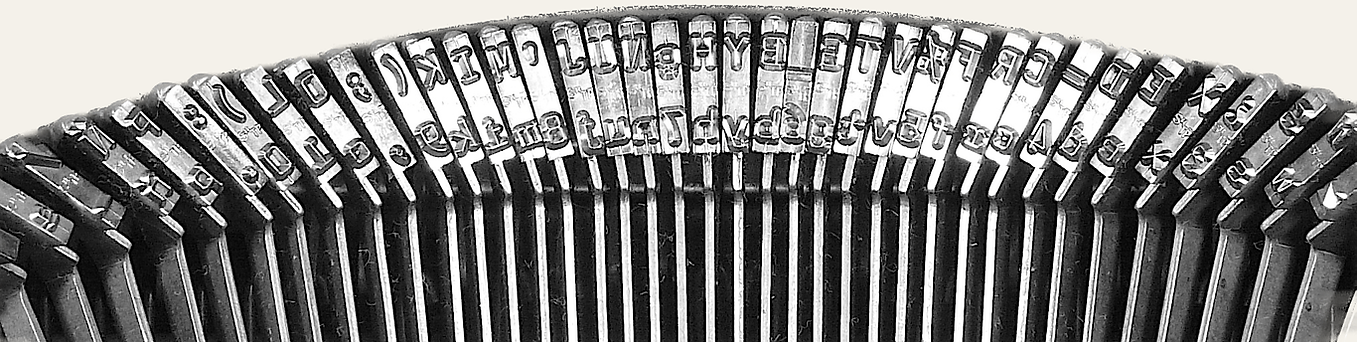
Our Restoration Process
In general, we assess each typewriter when received by us. We have a 20-point checklist to review every aspect of the machine’s functioning. AFter completing this review. We determine the overall cosmetic condition of the typewriter and determine steps forward to bring it back, as much as possible to its original condition.
Then we begin by removing the external frame to be able to reach the mechanical elements more fully. Any repairs that were identified during our review process are then undertaken. When the repairs are completed, the mechanical elements are cleaned using a liquid mixture that we have devised over the years. Following a full cleaning, we then lubricate where required.
After this, the platen is removed and reconditioned. At this time the carriage and its movement are scrutinized and any adjustements required are undertaken. Then the platen and, if necessary, the carriage are replaced onto the mechanical base of the machine.
Now, the external frame (the “body”) is replaced onto the mechanical elements. A new ribbon is placed onto the spools and the character alignment is checked and sdjusted as necessary.
The external finish is cleaned as needed and, on typewriters with a smooth or gloss fiish, the body is polished with a special wax that brings out the original factory-finish.
The case is then cleaned and repaired as needed and the attachment of the typewriter into the case is tested and adjusted as needed. Finally, a special finish is applied to the exterior of the case to protect against moisture and any further deterioration due to aging.
After this, we have a cup of coffee and admire the beautiful machine.
All of our typewriters have gone through the following inspections (as applicable to the model) among others, and adjustments have been
made as required:
1. Carriage movement
2. Platen condition
3. testing of platen locks, free head and
paper release
4. Condition and pressure of front and rear
feed rollers
5. Line space mechanism
6. Position and action of paper shield and
paper bail functions
7. Testing of paper guides
8. Placement and clearance of line gauge
9. Proper functioning of carriage release
levers
10. Movement and play of shift mechanism
11. Correct action of shift keys
12. Testing of cylinder and anvil positions
13. Spring drum tension
14. Ribbon feed and reverse, and ribbon
position
15. Typebar and type guide position and
action
16. Margin release, line lock and bell
mechanisms
17. Space bar trip, key lever spring tensions, level of keyboard
18. Key card correspondence with characters
19. Character alignment
20. Ribbon cover fitting and tension
21. Tabulator system check and adjustment
22. Keylever tension
23. Backspace mechanism check